






AI Solution For Better HR Candidate Pre-Screening
An AI-powered pre-screening solution that allows recruiters to focus on the strongest candidates and get the right people hired 35% faster.
AI-powered solution
Human resources
4-months MVP development & 3-month adjustment + features extension
40% less time spent on screening resumes

40% less recruiter time spent on resume screening
Automated resume parsing, skill extraction, and job-fit scoring reduced the time recruiters spend reviewing applications from 100 minutes to 60 minutes per comparable batch of candidates.
35% faster time-to-hire
AI-powered pre-screening helped recruiters identify relevant candidates earlier, reducing the average time required to fill a position from 20 days to 13 days.
AI-ranked candidate shortlists
The scoring engine evaluates applicants against job-related criteria, helping recruiters prioritize candidates whose skills and experience match the role.
About the project
A mid-sized recruitment platform approached our agency to upgrade their hiring workflow. They were struggling with a high volume of job applications and spending too much recruiter time on manual pre-screening.
The client wanted to automate repetitive pre-screening tasks without removing human oversight from hiring decisions. The solution also needed to integrate with the Applicant Tracking System (ATS), while addressing data privacy and fairness requirements.
Yellow developed an AI-powered candidate pre-screening solution that processes resumes, extracts relevant qualifications, scores candidates against job requirements, and conducts initial screening conversations.
The client had
Existing job portal and ATS
Historical data
We were responsible for
Building an AI-powered solution for the pre-screening process
Integration with existing systems
Team
Project manager
Two ML engineers
Data engineer
Backend engineer
Frontend engineer
QA engineer
UX/UI designer (patr-time)
DevOps engineer (part-time)

Team
To realize the client’s vision, we have allocated the following team:


Scope of work
We approached the project with a structured strategy that allowed us to move quickly and efficiently.

Discovery and planning
We mapped hiring workflows, defined candidate evaluation criteria, and reviewed the necessary legal requirements. We also assessed data availability and quality.

Data preparation and cleaning
Next, we structured historical candidate data, archived conversations, and anonymized sensitive attributes like gender, age, ethnicity, and salary expectations. We then stored sensitive attributes for audit purposes only. With clean data, we built datasets for training and evaluation.

AI/ML development
When the data was ready, we developed a resume parsing pipeline, created a scoring model to match candidates to jobs, and fine-tuned an LLM-based chatbot for pre-screening conversations.

UX/UI design and frontend development
We designed and validated wireframes and prototypes with the HR team, then developed a React-based recruiter dashboard and an AI plugin embedded in the ATS interface. We also built a chat interface for candidate pre-screening.

ATS integration
To integrate the solution into the existing systems, we developed middleware and enabled bi-directional sync for candidate status updates, notes, and AI-generated insights.

Testing and validation
We conducted bias testing against datasets with injected sensitive data and user acceptance testing with recruiters. With the feedback from the HR department, we made the necessary iterations.

Deployment and support
Finally, we deployed the solution to the cloud environment. The job didn’t stop there: we still provide ongoing support and small model updates when necessary.
Workflow integration
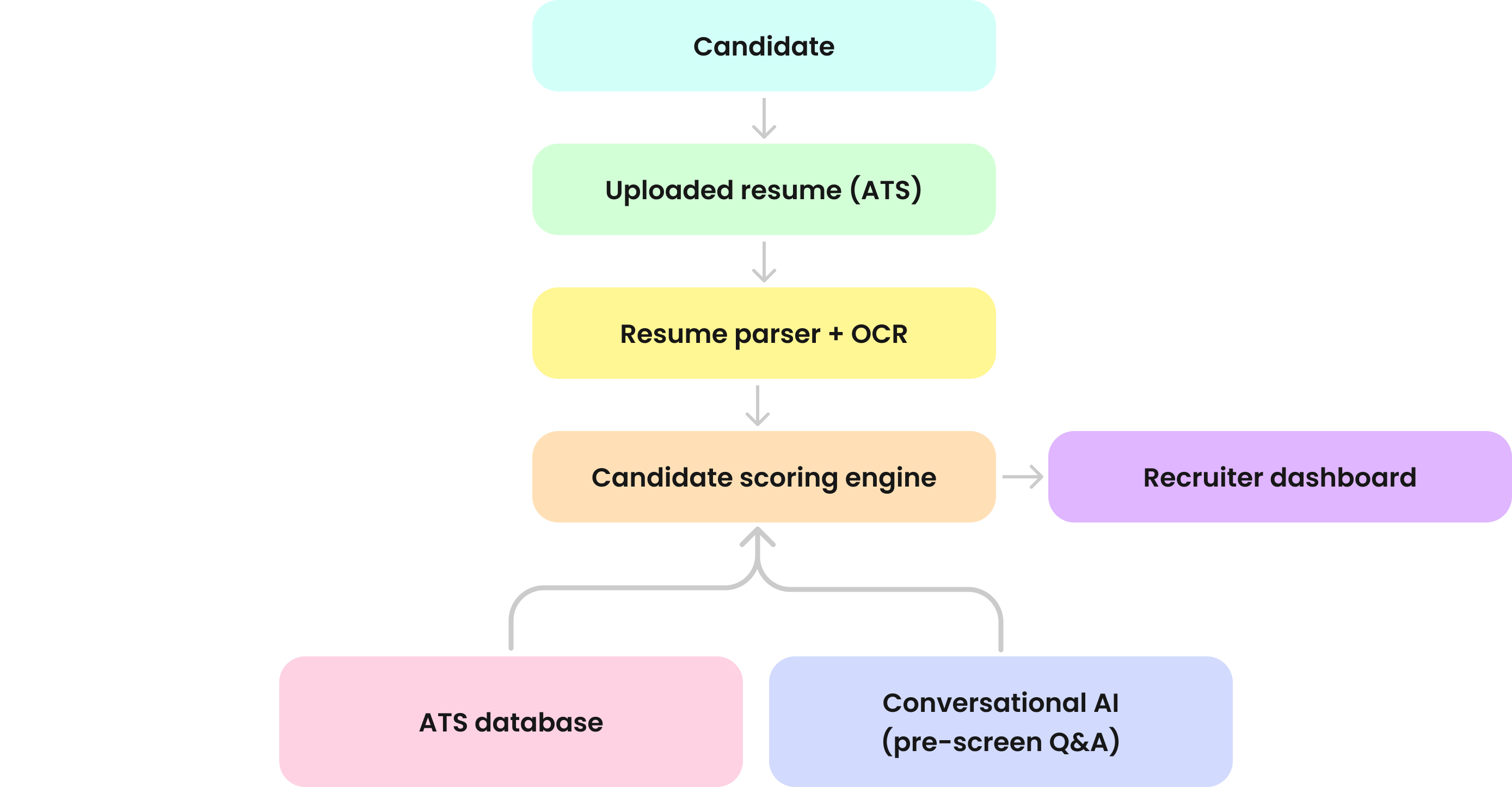
Key AI-powered solution features
Here are the modules that constitute the final system.

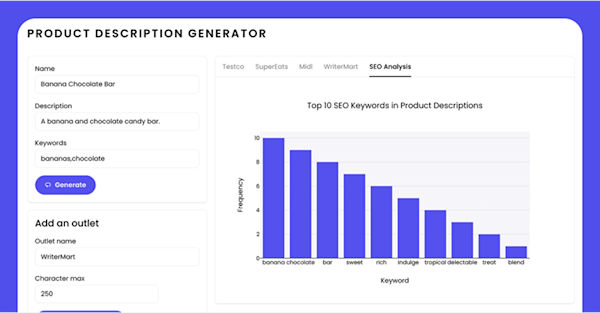
Resume parsing and skill extraction
AI extracts structured information (skills, job history, education, certifications) from PDFs, images, and Word documents.

Candidate scoring engine
Each applicant is scored on a 0–100 scale based on skills match, years of relevant experience, and relevant certifications/education.

Conversational AI pre-screening
Chatbot conducts initial Q&A with candidates about salary expectations, availability to start, soft skills, and motivation.

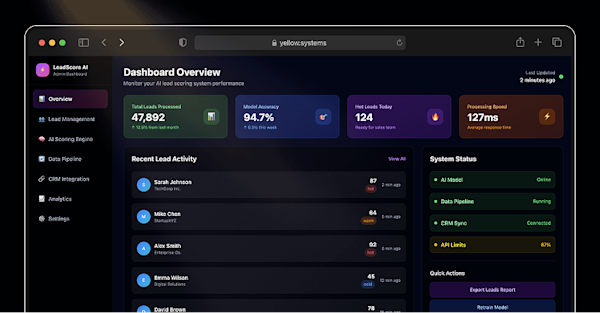
Recruiter dashboard
A web UI where recruiters can see AI-ranked candidate lists, review parsed resume details and screening chat summaries, and override AI scores if needed.


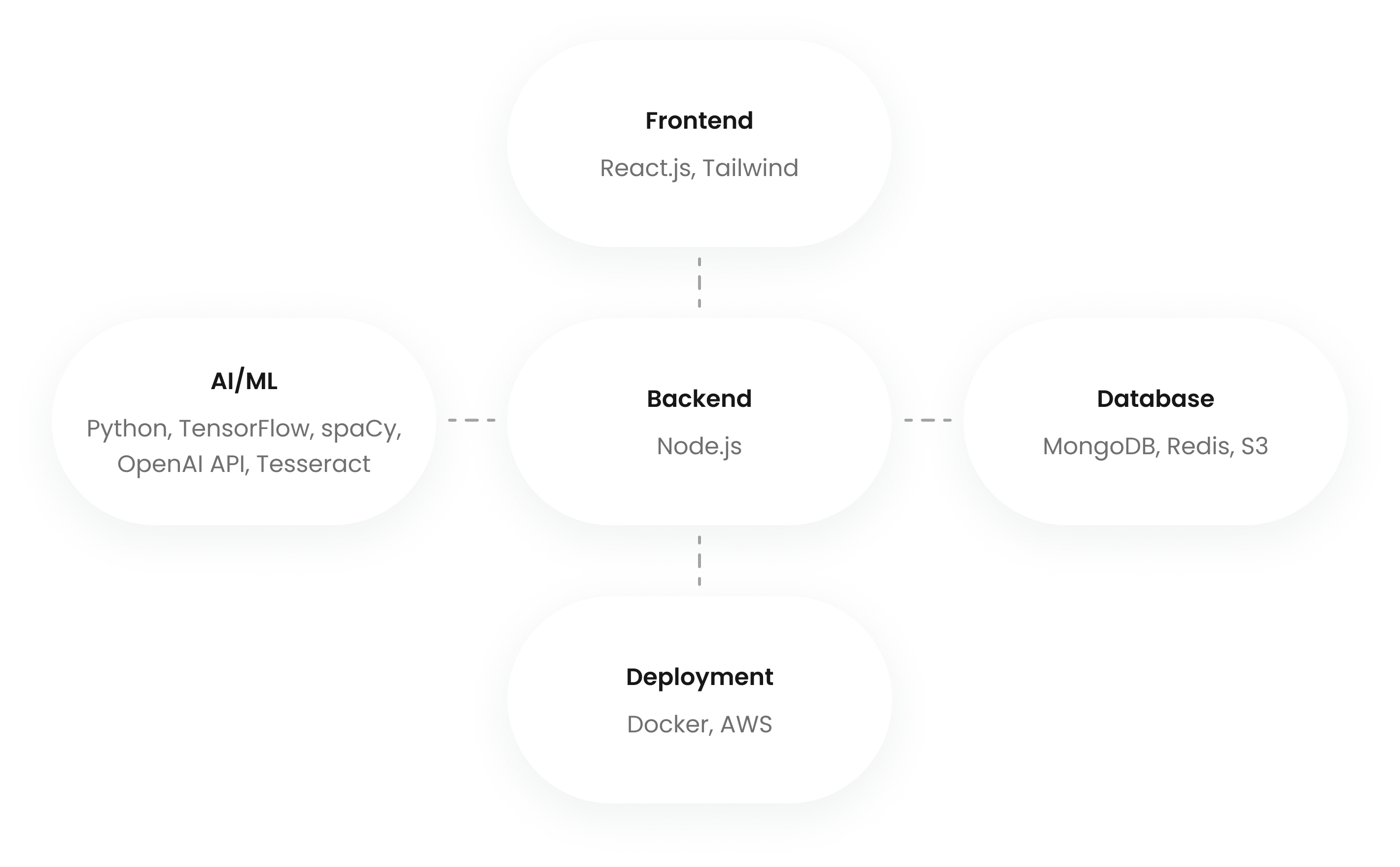
Tech stack
The technologies we used to realise the LLM integration smoothly.
Development challenges and solutions
Data privacy
Challenge: Hiring data often contains personally identifiable information (PII), including names, photos, and birth dates. Feeding this directly into an AI model risks violating data privacy regulations.
Solution: We implemented a data anonymization pipeline: Before resumes enter the model, PII fields are masked and securely stored for future audit.
Integration with existing ATS
Challenge: The client’s ATS didn’t have a clean API for candidate data. Some data was stuck in PDFs, CSV exports, and custom fields. Without smooth integration, recruiters would have to juggle two systems.
Solution: Our team developed middleware APIs that could translate ATS data formats into the AI system and built ETL pipelines to import historical hiring archives and set up import/export for upcoming live data.
Unstructured resumes
Challenge: Many resumes came in unstructured formats (PDFs with tables, scanned images, design-heavy templates). These were difficult to parse correctly, and skills and experience might be misread.
Solution: We used OCR (Optical Character Recognition) for image-based resumes and implemented a confidence flag: If parsing confidence was less than 85%, the recruiter was notified to review manually.
Result
The AI-powered candidate pre-screening solution automated repetitive recruitment tasks while keeping recruiters involved in candidate evaluation. After 4 months of usage, the client saw:
40% reduction in recruiter time spent on resume screening.
35% faster time-to-hire compared to previous cycles.
Recruiters reported higher satisfaction.

FAQ
What recruitment problem did the client face?
What did Yellow develop for the recruitment platform?
How does the pipeline evaluate candidates?
Can the solution process resume in different formats?
How did Yellow integrate the solution with the client's existing ATS?
How did the solution preserve recruiter oversight?
monthly cost.