






AI Concierge Agent for a Hotel Network
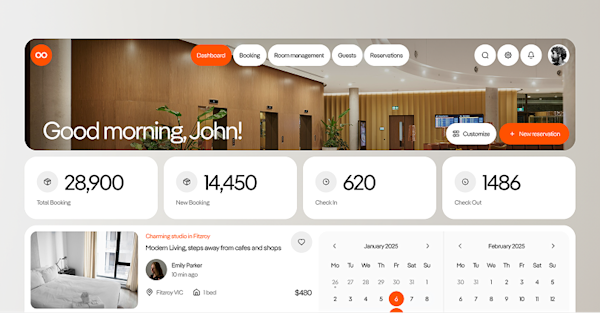
Developed a multilingual AI concierge that helps hotel guests with check-ins, room service requests, local recommendations, and booking-related questions.

35% fewer front-desk calls
The AI concierge automated routine guest interactions, reducing the number of calls handled by front-desk staff.
22% higher guest satisfaction
The virtual assistant improved the guest experience by providing accessible support for common questions and hotel services.
24/7 guest support
The concierge handles guest inquiries around the clock, helping guests access information and submit requests without waiting for front-desk availability.
15+ properties connected
The solution was designed for a hotel network operating across multiple cities, with integrations supporting existing hotel systems and guest-facing channels.
About the project
A US-based hotel network with 15+ properties across multiple cities wanted to upgrade the guest experience and reduce front-desk workload. Their existing property management system (PMS) handled reservations and billing, but guest interactions like check-in questions and room service requests were handled manually. It resulted in long wait times and reduced guest satisfaction.
The client approached our agency to design and implement an AI concierge agent capable of handling guest inquiries, automating requests, and integrating with existing hotel systems.
The client had
Property Management System (PMS)
Booking engine
A mobile app and website
Room service system
In-room tablets software
We were responsible for
AI concierge development
System integration
Multi-platform support
Web, mobile, and in-room tablet interfaces support

Team
To achieve all the goals, we combined the following professionals

Development process
All our projects go through an established development process that has been proven with multiple successful results.
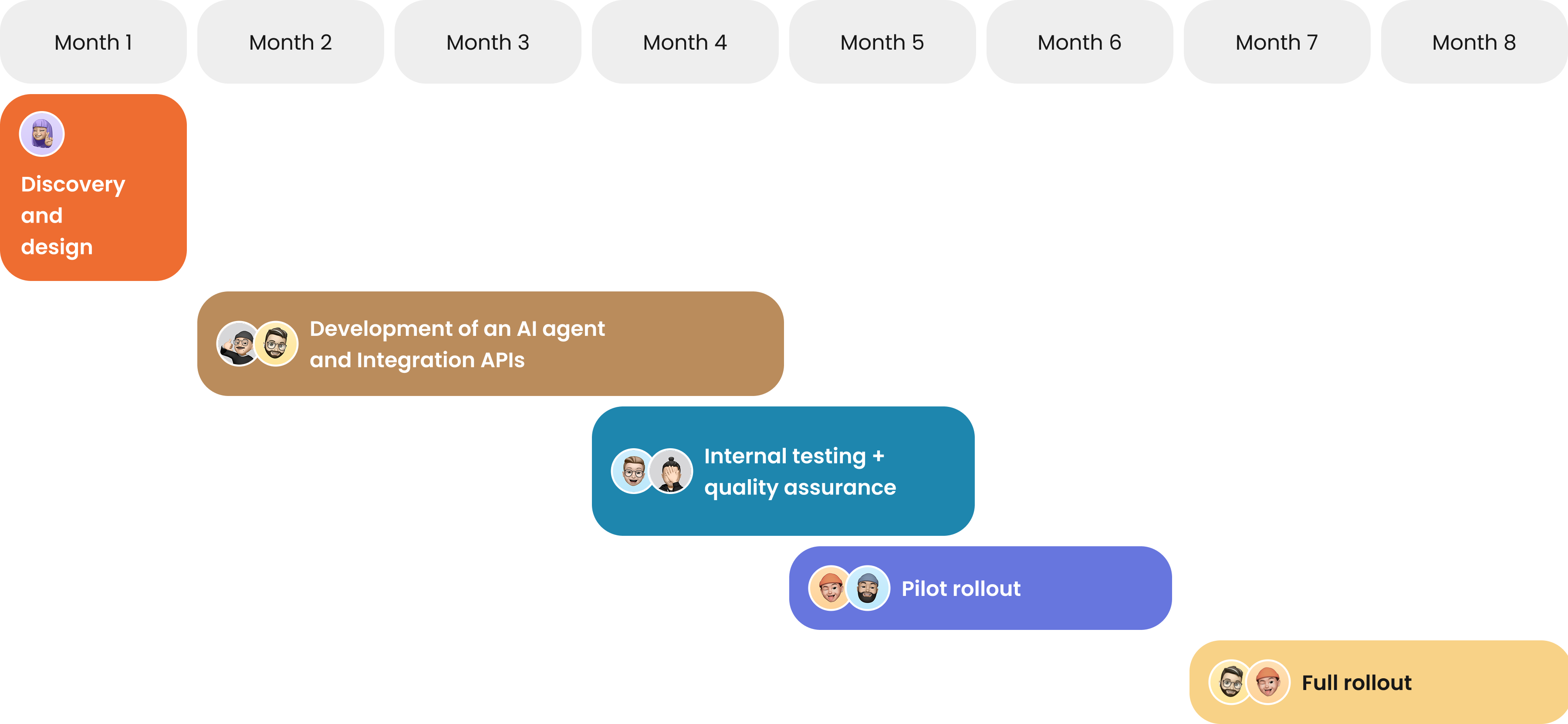
Project timeline
Key AI concierge features
Things the final solution can do.
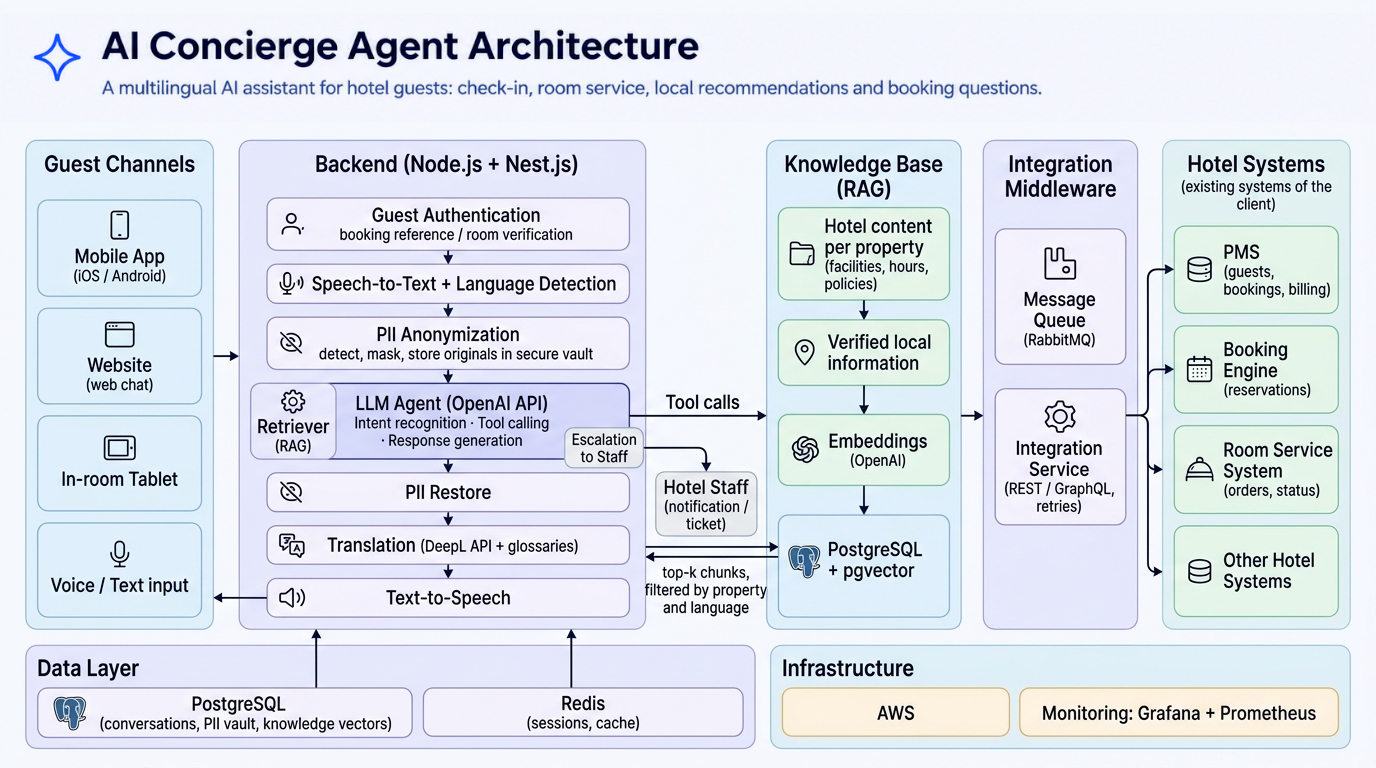

Tech stack
The technologies we used to realise the LLM integration smoothly.

Development challenges and solutions
What we faced during the development process.
Data privacy
Challenge: Сheck-in/check-out data contains personally identifiable information (PII) like names, gender, and birth dates. Feeding this directly into an AI model risks violating data privacy regulations.
Solution: We implemented a data anonymization pipeline: Before the user's request enters the model, PII fields are detected, masked, and securely stored in an internal DB.
Knowledge accuracy
Challenge: Guests ask about facilities, opening hours, hotel policies, and local attractions, and the answers differ from property to property across 15+ hotels.
Solution: We built a retrieval-augmented generation (RAG) layer. Hotel content and verified local information for each property are split into chunks, converted to embeddings, and stored in PostgreSQL with the pgvector extension. For each guest request, the agent retrieves the most relevant chunks, filtered by property and language, and generates the answer only from the retrieved data.
PMS integration
Challenge: PMS API had limited documentation and inconsistent performance.
Solution: We built a middleware service with a queue-based architecture to handle retries and avoid downtime.
Multi-language support
Challenge: The hotel network has guests from 12+ countries.
Solution: Our team used AI translation APIs combined with domain-specific fine-tuning to avoid awkward translations.
Voice in noisy environments
Challenge: During the pilot project, in-room voice recognition sometimes struggled with TV/kids/background chatter.
Solution: We added speech preprocessing and fallback to text chat on tablets/phones.
Result
We developed an AI concierge agent that serves as a 24/7 virtual assistant for hotel guests. The agent handles booking confirmations, check-in/check-out support, room service orders, facility information, and local recommendations. By automating routine guest interactions and providing multilingual support, the concierge helps hotel staff spend less time answering repetitive questions and more time delivering personalized service.
35% reduction in front-desk call volume.
22% increase in guest satisfaction scores.
Positive feedback from both staff and guests.


FAQ
Why did the hotel network need an AI concierge?
What guest services did Yellow include in the AI concierge?
Which channels could guests use to access the concierge?
How did Yellow address integration with the hotel's existing systems?
How did the concierge support international guests?
What results did the hotel concierge deliver?
monthly cost.